Narasimha Mantra — Ugram Viram Mahavishnum
Meaning, pronunciation and the fierce-yet-gracious Narasimha chant
This is the beloved Narasimha verse 'Ugraṃ Vīraṃ Mahāviṣṇuṃ' — a salute to Vishnu's man-lion form, fierce toward all that harms and gracious toward those who take refuge. Devotees turn to it for courage and a felt sense of protection.
Dhyāna verse / mantra of Narasimha · 1h 31m chant
Listen
This is Spiritual Awakening's own long-form recording — the official way to listen. There is no separate audio hosted on this page.
Best suited for: Gathering courage and dispelling fear · Devotional focus and meditation · Calm listening at night
Sacred text
Devanagari
उग्रं वीरं महाविष्णुं ज्वलन्तं सर्वतोमुखम्। नृसिंहं भीषणं भद्रं मृत्युमृत्युं नमाम्यहम्॥
IAST transliteration
Ugraṃ Vīraṃ Mahāviṣṇuṃ Jvalantaṃ Sarvatomukham | Nṛsiṃhaṃ Bhīṣaṇaṃ Bhadraṃ Mṛtyumṛtyuṃ Namāmyaham ||
Simple pronunciation
Ug-ram Vee-ram Ma-haa-vish-num Jva-lan-tam Sar-va-to-mu-kham; Nri-sim-ham Bhee-sha-nam Bhad-ram Mrit-yu-mrit-yum Na-maam-ya-ham
Meaning
I bow to Narasimha — the fierce, heroic form of the great Vishnu, blazing and facing every direction; terrifying to evil yet gracious to devotees, the very death of death.
- Literal meaning
- I bow to the fierce, heroic Mahāviṣṇu — blazing, facing all directions, the man-lion, terrible and auspicious, the death of death.
- Devotional interpretation
- The verse holds a single striking picture: a protector so fierce that fear itself is afraid of him, yet whose fierceness is turned entirely toward the devotee's good. To chant it is to stand behind that protection.
Word-by-word meaning
| Word | IAST | Literal meaning | Explanation |
|---|---|---|---|
| उग्रं | ugraṃ | fierce, formidable | The intensity that overwhelms all that harms. |
| वीरं | vīraṃ | heroic, brave | The courageous power of the protector. |
| महाविष्णुं | mahāviṣṇuṃ | the great Vishnu | Narasimha as a supreme form of Vishnu himself. |
| ज्वलन्तं | jvalantaṃ | blazing, flaming | Radiant with an almost fiery light. |
| सर्वतोमुखम् | sarvatomukham | facing all directions | Present and watchful everywhere at once. |
| नृसिंहं | nṛsiṃhaṃ | the man-lion | The form that is neither wholly man nor beast — beyond every category. |
| भीषणं | bhīṣaṇaṃ | terrifying | Fearsome — but to negativity and evil, not to the devotee. |
| भद्रं | bhadraṃ | auspicious, gracious | The same form is gentle and blessing toward those who take refuge. |
| मृत्युमृत्युं | mṛtyumṛtyuṃ | the death of death | The power before which even death has no hold. |
| नमाम्यहम् | namāmyaham | I bow | The devotee's salutation (namāmi + aham, 'I bow'). |
उग्रंugraṃ
- Literal meaning
- fierce, formidable
- Explanation
- The intensity that overwhelms all that harms.
वीरंvīraṃ
- Literal meaning
- heroic, brave
- Explanation
- The courageous power of the protector.
महाविष्णुंmahāviṣṇuṃ
- Literal meaning
- the great Vishnu
- Explanation
- Narasimha as a supreme form of Vishnu himself.
ज्वलन्तंjvalantaṃ
- Literal meaning
- blazing, flaming
- Explanation
- Radiant with an almost fiery light.
सर्वतोमुखम्sarvatomukham
- Literal meaning
- facing all directions
- Explanation
- Present and watchful everywhere at once.
नृसिंहंnṛsiṃhaṃ
- Literal meaning
- the man-lion
- Explanation
- The form that is neither wholly man nor beast — beyond every category.
भीषणंbhīṣaṇaṃ
- Literal meaning
- terrifying
- Explanation
- Fearsome — but to negativity and evil, not to the devotee.
भद्रंbhadraṃ
- Literal meaning
- auspicious, gracious
- Explanation
- The same form is gentle and blessing toward those who take refuge.
मृत्युमृत्युंmṛtyumṛtyuṃ
- Literal meaning
- the death of death
- Explanation
- The power before which even death has no hold.
नमाम्यहम्namāmyaham
- Literal meaning
- I bow
- Explanation
- The devotee's salutation (namāmi + aham, 'I bow').
Translations are prepared with editorial review against the Sanskrit text, transliteration and English master meaning. Sanskrit words may carry layers of meaning that no single translation can fully express.
How to chant
Preparation
- Sit with an easy, upright spine.
- Read the verse slowly once before chanting.
Pronunciation notes
- Keep the strong syllables crisp: Ug-ram, Vee-ram, Bhee-sha-nam.
- Nṛsiṃhaṃ — 'Nri-sim-ham', with a light rolled 'ṛ'.
- There is no need for perfection; steady, clear repetition matters most.
How many times
Chant aloud, softly, or silently. As a longer verse, a smaller count held with attention (9, 11, or 21) works well; a full mālā is also fine.
To close
Sit quietly for a few breaths, resting in the steadiness the verse leaves behind.
How to use the recording
Chanting along
Follow the two lines and repeat along with the recording.
Meditation
Hold the single image of the fierce-yet-gracious protector as your focus.
Prayer or pūjā
Play it during a devotional moment when you seek courage or refuge.
Sleep listening
Keep the volume gentle; let its steady rhythm ease you toward rest.
Morning practice
A few rounds to begin the day with courage and steadiness.
Background atmosphere
Let it play softly as a protective, devotional atmosphere.
Background & sourcesClassification, origin, historical context, symbolism, intentions & occasions
What kind of sacred text is this?
This is a dhyāna verse — a meditative visualisation-and-salutation of Narasimha, chanted as a mantra. Its structure is a single śloka describing the deity and ending 'namāmyaham' ('I bow'). Its protective feeling comes from the vivid refuge it evokes, rather than from a limb-by-limb protective hymn.
Origin and textual source
- Tradition / work
- A well-known Narasimha dhyāna verse
- Section
- Associated with the Nṛsiṃha (Narasimha) devotional tradition, including the Nṛsiṃha Tāpanīya stream
- Attribution
- Traditional
Historical and devotional context
Narasimha, the man-lion, is the avatar of Vishnu who appears to protect the child-devotee Prahlada and to end the tyranny of Hiranyakashipu. This verse distils that story into a single image of fierce, boundary-breaking protection — a form that is 'neither this nor that', and so able to meet what nothing else can.
The verse is chanted for courage and for the felt reassurance of being guarded. Its dense, drum-like sounds — ugraṃ, vīraṃ, bhīṣaṇaṃ — give it a strong, steadying rhythm in long repetition.
Symbolism and inner meaning
- Fierce (bhīṣaṇaṃ) and gracious (bhadraṃ) in one breath — the same power is terror to harm and shelter to the devotee.
- 'The death of death' points beyond physical fear to the end of all that binds.
- 'Neither man nor beast' shows a divine that cannot be boxed in by our categories.
Traditionally associated intentions
Traditional purpose
- Invocation of Narasimha's protection
- Cultivating courage and fearlessness
- Devotional focus and meditation
Devotional intentions
- Courage
- Protection and reassurance
- Fearlessness
- Devotion
This recording is for
- Long-form chanting
- Meditation
- Calm listening at night
- A devotional atmosphere
A note on wellbeing: Many find strong, rhythmic chanting steadying when the mind is anxious. This is devotional practice, not medical treatment.
When is it traditionally chanted?
Narasimha Jayanti
The appearance day of Narasimha is a natural time to chant more; the verse suits any day with devotion.
Moments that call for courage
Devotees often turn to it before a difficult task or during fear.
Related mantras
 2h 35m
Mahakaleshwar Jyotirlinga Mantra
अवन्तिकायां विहितावतारं मुक्तिप्रदानाय च सज्जनानाम्। अकालमृत्योः परिरक्षणार्थं वन्दे महाकाल-महासुरेशम्॥
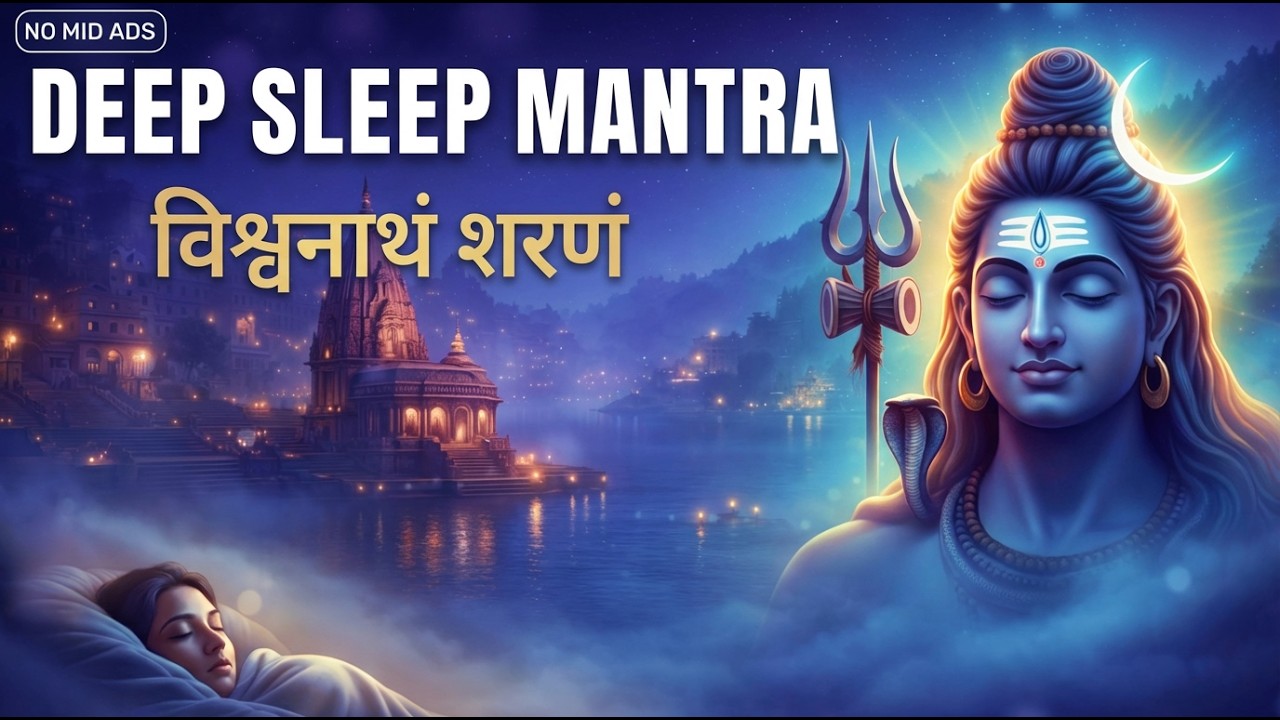 2h 37m
Kashi Vishwanath Jyotirlinga Mantra
सानन्दमानन्दवने वसन्तमानन्दकन्दं हतपापवृन्दम् । वाराणसीनाथमनाथनाथं श्रीविश्वनाथं शरणं प्रपद्ये ॥
 2h 8m
2h 8mOm Namo Bhagavate Vasudevaya
ॐ नमो भगवते वासुदेवाय नमः